Teen Mental Health Crisis Statistics 2026
Last updated: April 2026
The teen mental health crisis is not new — but it is accelerating. Federal data shows persistent increases in depression, anxiety, suicidal ideation, and substance use among adolescents, while the treatment system remains fragmented and underfunded. This page compiles the most current publicly available data on teen mental health prevalence, treatment access, and system capacity.
Table of Contents
- How Many Teens Struggle with Depression and Anxiety?
- How Prevalent Is Teen Suicide and Self-Harm?
- How Many Teens Have Substance Use Disorders?
- How Many Teens Actually Get Mental Health Treatment?
- How Many Teens Are Currently in Residential Treatment?
- How Is the 988 Suicide & Crisis Lifeline Performing?
- How Has Teen Mental Health Changed Over Time?
How Many Teens Struggle with Depression and Anxiety?
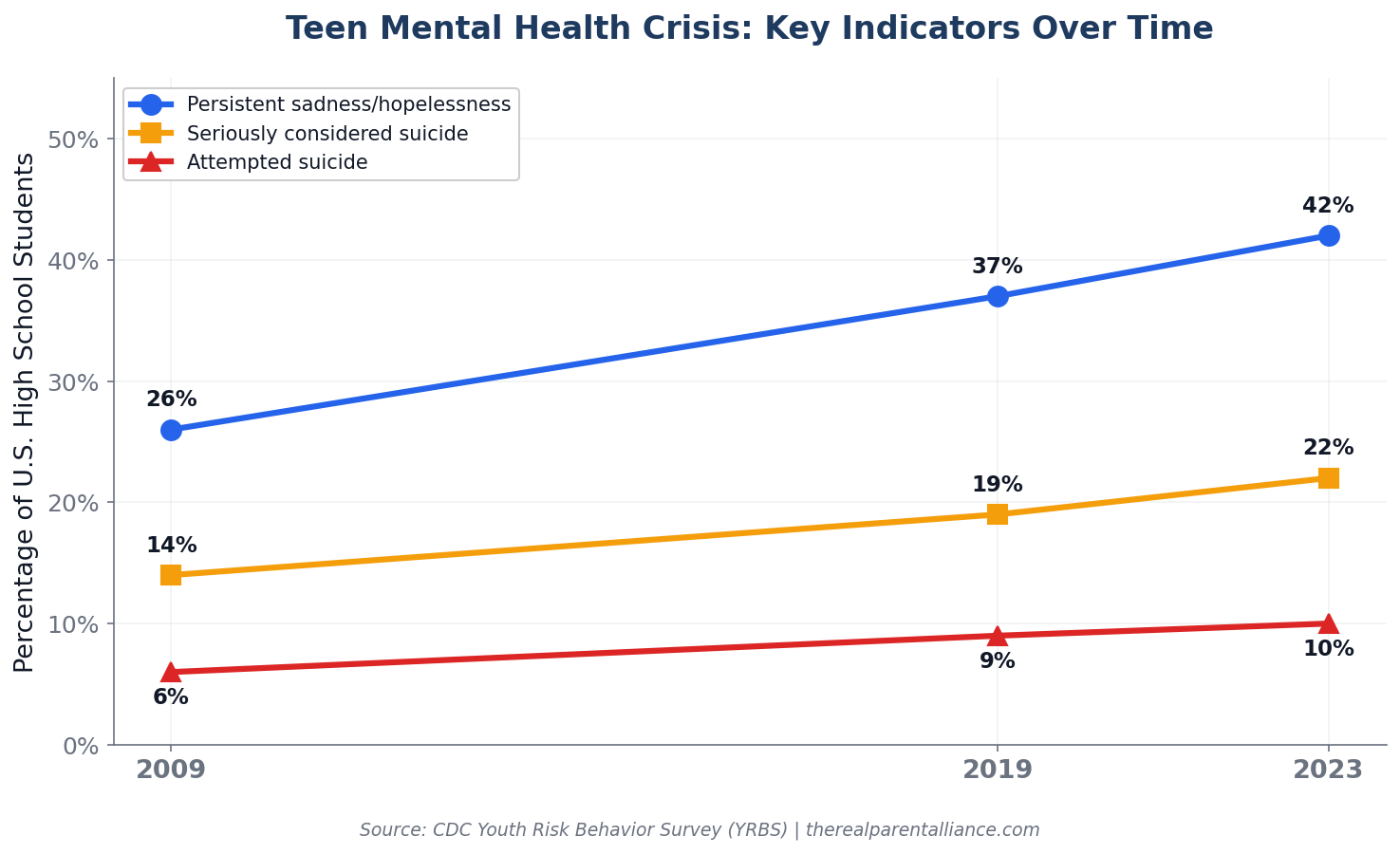
Approximately 42% of U.S. high school students reported persistent feelings of sadness or hopelessness in 2023, up from 26% in 2009. An estimated 4.1 million adolescents aged 12–17 had at least one major depressive episode in the past year.
42%
Percentage of U.S. high school students who reported persistent feelings of sadness or hopelessness (lasting 2+ weeks, enough to stop usual activities) in the 2023 Youth Risk Behavior Survey — up from 26% in 2009.
Source: CDC — Youth Risk Behavior Surveillance System (YRBSS) Data Summary & Trends Report (2023)
4.1 million
Adolescents aged 12–17 who experienced at least one major depressive episode in the past year in the United States.
Source: SAMHSA — 2023 National Survey on Drug Use and Health (NSDUH) Detailed Tables (2023)
57%
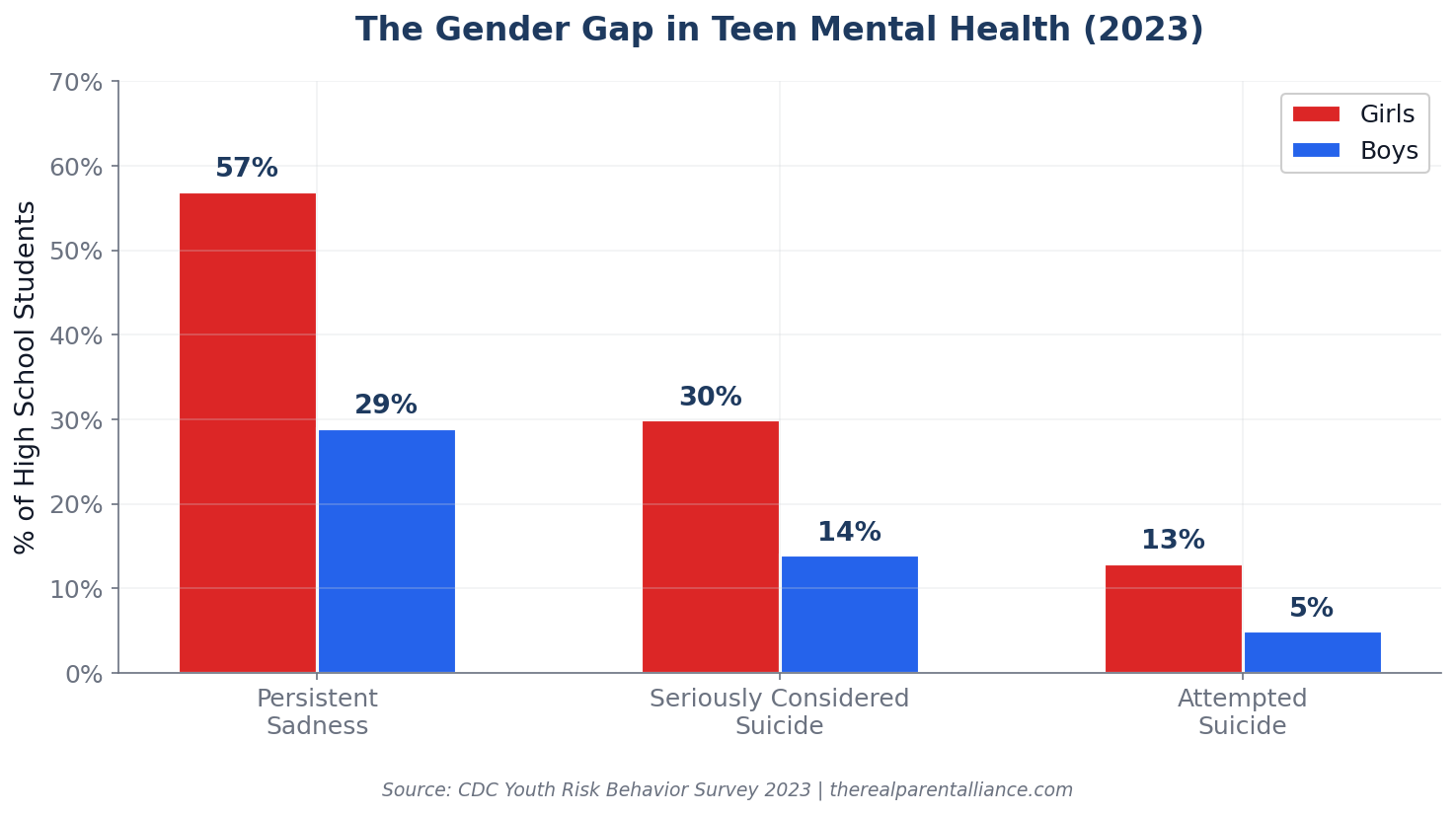
Percentage of teen girls who reported persistent sadness or hopelessness in 2023, compared to 29% of teen boys — the widest gender gap recorded by the CDC.
Source: CDC — YRBS Data Summary & Trends Report: Trends by Sex (2023)
20%
Percentage of adolescents aged 12–17 who meet diagnostic criteria for an anxiety disorder at any given time.
Source: NIMH — Any Anxiety Disorder Among Adolescents (2023)
Note: The CDC's Youth Risk Behavior Survey (YRBS) is conducted every two years with a nationally representative sample of high school students. The 2023 data reflects responses from approximately 17,000 students across the U.S.
How Prevalent Is Teen Suicide and Self-Harm?
Suicide is the second leading cause of death for Americans aged 10–14 and the third leading cause for those aged 15–24. In 2023, 22% of high school students seriously considered attempting suicide.
2nd leading cause
Suicide is the second leading cause of death among Americans aged 10–14, behind only accidents/unintentional injuries.
Source: CDC — WISQARS Leading Causes of Death Visualization Tool (2023)
22%
Percentage of U.S. high school students who seriously considered attempting suicide in the past year.
Source: CDC — Youth Risk Behavior Surveillance System (YRBSS) Data Summary (2023)
10%
Percentage of high school students who attempted suicide one or more times in the past year.
Source: CDC — YRBSS Data Summary & Trends Report (2023)
30%
Percentage of teen girls who reported seriously considering suicide in 2023, compared to 14% of teen boys.
Source: CDC — YRBSS Data Summary: Trends by Sex (2023)
Note: If you or someone you know is in crisis, contact the 988 Suicide & Crisis Lifeline by calling or texting 988. For teens in immediate danger, call 911.
How Many Teens Have Substance Use Disorders?
An estimated 2.2 million adolescents aged 12–17 had a substance use disorder in the past year. Fentanyl-related overdose deaths among teens increased 300%+ between 2019 and 2023.
2.2 million
Adolescents aged 12–17 with a past-year substance use disorder (alcohol or illicit drugs) in the United States.
Source: SAMHSA — 2023 NSDUH Detailed Tables: Substance Use Disorder (2023)
300%+
Increase in fentanyl-related overdose deaths among adolescents aged 14–18 between 2019 and 2023. Counterfeit pills (fake Xanax, Percocet, etc.) are the primary vector.
Source: CDC WONDER — Multiple Cause of Death Database, Provisional Drug Overdose Death Counts (2019–2023)
15%
Percentage of 12th graders who reported vaping nicotine in the past 30 days. Vaping rates remain significantly higher than combustible cigarette use among teens.
Source: Monitoring the Future Survey — National Institute on Drug Abuse / University of Michigan (2023)
Note: Fentanyl-related teen deaths represent a distinct crisis within the broader teen mental health emergency. Many teens who die from fentanyl exposure were not using opioids intentionally — they consumed counterfeit pills they believed to be prescription medications.
How Many Teens Actually Get Mental Health Treatment?
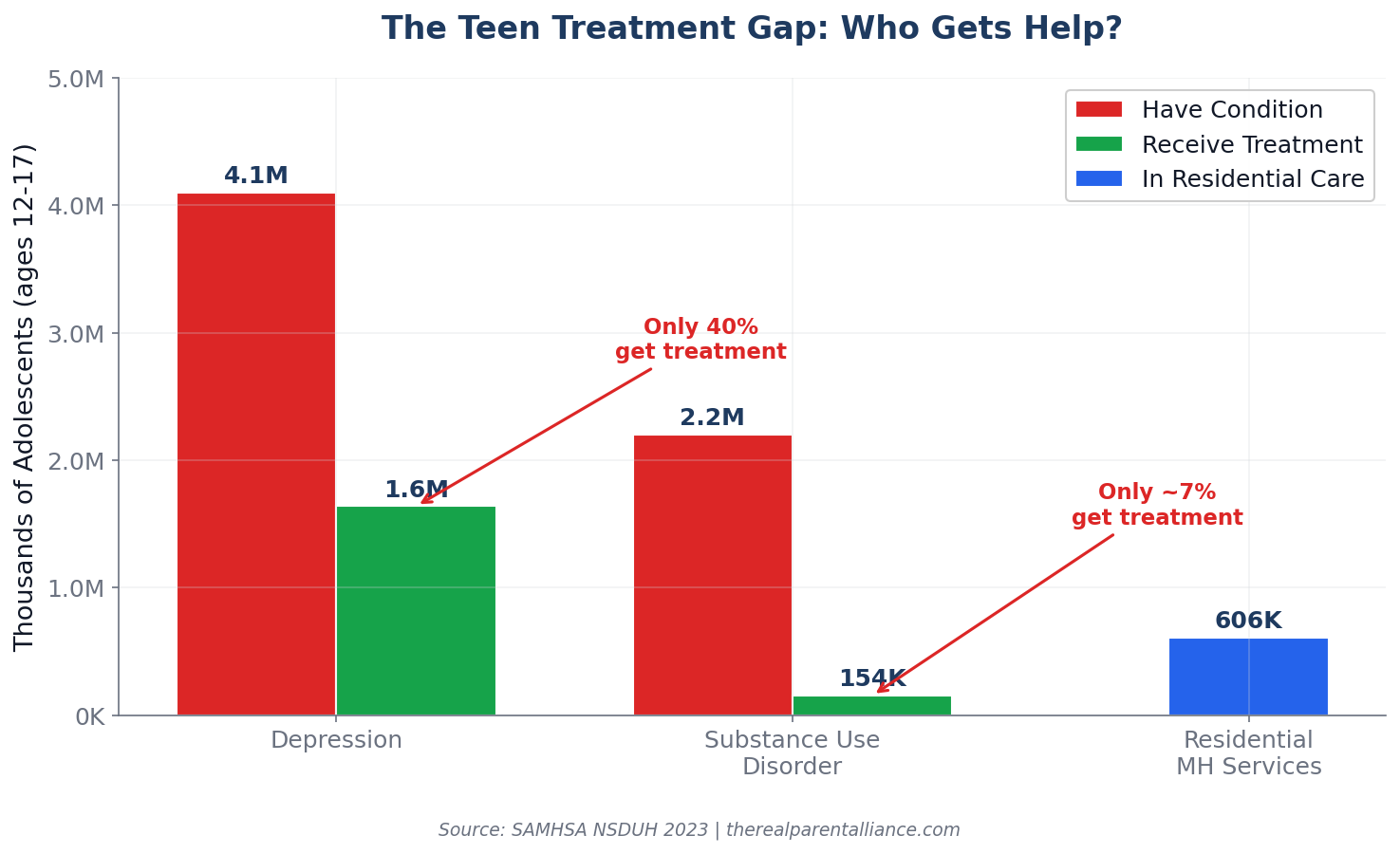
Only 40% of adolescents with a major depressive episode received any treatment in the past year. Among teens with substance use disorders, the treatment rate drops to approximately 7%.
40%
Percentage of adolescents aged 12–17 with a major depressive episode who received treatment (therapy, medication, or both) in the past year. Meaning 60% of depressed teens go untreated.
Source: SAMHSA — 2023 NSDUH: Mental Health Service Utilization Among Adolescents (2023)
~7%
Approximate percentage of adolescents with a substance use disorder who received any specialty treatment in the past year.
Source: SAMHSA — 2023 NSDUH: Substance Use Treatment Among Adolescents (2023)
606,000
Children and adolescents receiving residential mental health treatment services annually — less than 3% of those with diagnosed mental health conditions.
Source: SAMHSA — National Mental Health Services Survey (N-MHSS) (2022)
60%
Percentage of U.S. counties that have no practicing child psychiatrist. Rural areas are disproportionately affected.
Source: AACAP — Workforce Maps: Child and Adolescent Psychiatrist Distribution by State (2023)
113 million
Americans living in designated mental health professional shortage areas (HPSAs), limiting access to outpatient care and pushing more families toward residential placement as a last resort.
Source: HRSA — Health Professional Shortage Areas (HPSA) Data Dashboard (2024)
Note: The gap between teens who need treatment and teens who receive it is not solely a question of willingness — many families cannot access care due to provider shortages, insurance barriers, and geographic limitations.
How Many Teens Are Currently in Residential Treatment?
An estimated 120,000–200,000 youth are in residential treatment facilities at any given time, with approximately 606,000 receiving residential mental health services annually. The majority are placed through juvenile justice or child welfare systems, not by parents.
120,000–200,000
Estimated number of youth in residential treatment facilities, wilderness programs, therapeutic boarding schools, and behavior modification programs at any given time.
Source: GAO — Residential Treatment Programs: Concerns Regarding Abuse and Death (2008 (most recent federal estimate))
36,479
Youth in juvenile residential placement facilities on a single census day, including detention centers, group homes, and residential treatment centers.
Source: OJJDP — Census of Juveniles in Residential Placement (CJRP) (2021)
66%
Percentage of youth in residential treatment who are placed through juvenile justice or child welfare systems rather than by parents seeking private placement.
Source: OJJDP — Juveniles in Residential Placement (2022)
Note: The most commonly cited estimate (120,000–200,000) comes from a 2008 GAO report and has not been updated. The actual number of youth in residential placement today is unknown because there is no comprehensive federal census of private residential treatment facilities.
How Is the 988 Suicide & Crisis Lifeline Performing?
The 988 Suicide & Crisis Lifeline handled over 5 million contacts (calls, texts, and chats) in its first full year of operation (2023), a 50%+ increase over the prior year under the old 10-digit number.
5+ million
Total contacts (calls, texts, and chats) handled by the 988 Suicide & Crisis Lifeline in 2023, its first full year of operation after the number transitioned from the 10-digit National Suicide Prevention Lifeline.
Source: SAMHSA — 988 Suicide & Crisis Lifeline Performance Dashboard (2023)
50%+
Increase in total crisis contacts after the transition to the 988 number compared to the prior year under the old 10-digit number.
Source: SAMHSA — 988 Performance Metrics and Reports (2023)
988
The three-digit number for the Suicide & Crisis Lifeline, operational since July 16, 2022. Available 24/7 by call, text, or chat for anyone in suicidal crisis or emotional distress.
Source: SAMHSA — 988 Suicide & Crisis Lifeline (2022)
Note: If you or someone you know is in crisis, contact the 988 Suicide & Crisis Lifeline by calling or texting 988. It is free, confidential, and available 24/7.
How Has Teen Mental Health Changed Over Time?
| Indicator | 2009 | 2019 | 2023 | Trend |
|---|---|---|---|---|
| Persistent sadness/hopelessness (all teens) | 26% | 37% | 42% | Worsening |
| Seriously considered suicide | 14% | 19% | 22% | Worsening |
| Attempted suicide | 6% | 9% | 10% | Worsening |
| Major depressive episode (12-17) | ~8% | ~16% | ~17% | Worsening |
| Received treatment for depression | ~38% | ~40% | ~40% | Flat |
| Fentanyl-related teen deaths | Minimal | Baseline | 300%+ increase | Crisis |
Share This Data
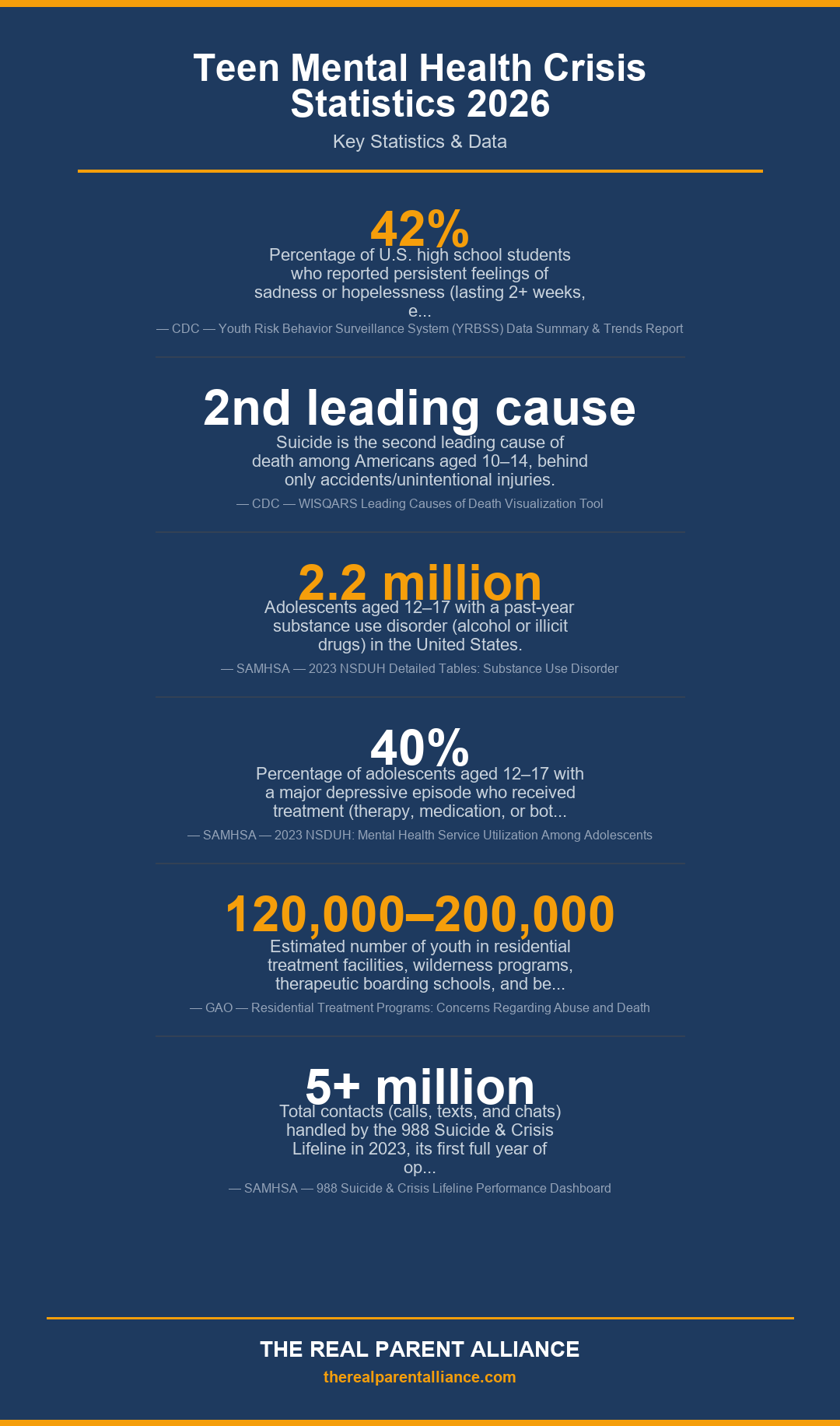
Download or share this infographic. If you use it on your website, please link back to this page as the source.
If your teenager is in crisis and you're considering residential treatment, TRPA provides independent guidance on program selection, safety vetting, and cost transparency — with zero referral fees from facilities.
